 ChatGPT
 Claude
 Perplexity
 Google AI
 Grok
Grok
Author

Chronic knee pain affects millions worldwide, limiting mobility and diminishing quality of life. Conditions such as osteoarthritis, rheumatoid arthritis, and post-traumatic degeneration often necessitate knee replacement surgery. Traditional methods, while effective, present challenges including prolonged recovery periods and variable patient outcomes. At Soundarapandian Bone and Joint Hospital, the integration of 3D modelling technology marks a significant advancement. This approach facilitates patient-specific knee replacement surgery, yielding enhanced precision, superior results, and accelerated rehabilitation.
In standard knee arthroplasty, surgeons utilise pre-manufactured implants from a finite inventory of sizes. This requires modifying the patient’s bone structure to accommodate the prosthesis, which can result in suboptimal alignment, excessive bone resection, and compromised joint kinematics. Such discrepancies contribute to postoperative pain, reduced range of motion, and elevated risks of complications, including implant loosening and revision surgery.
Recovery from traditional procedures typically spans 4-6 weeks for independent ambulation and 6-12 months for full functional restoration. Hospital stays average 5-7 days, with patients experiencing significant swelling, stiffness, and dependency on assistive devices. These factors underscore the need for more tailored interventions.
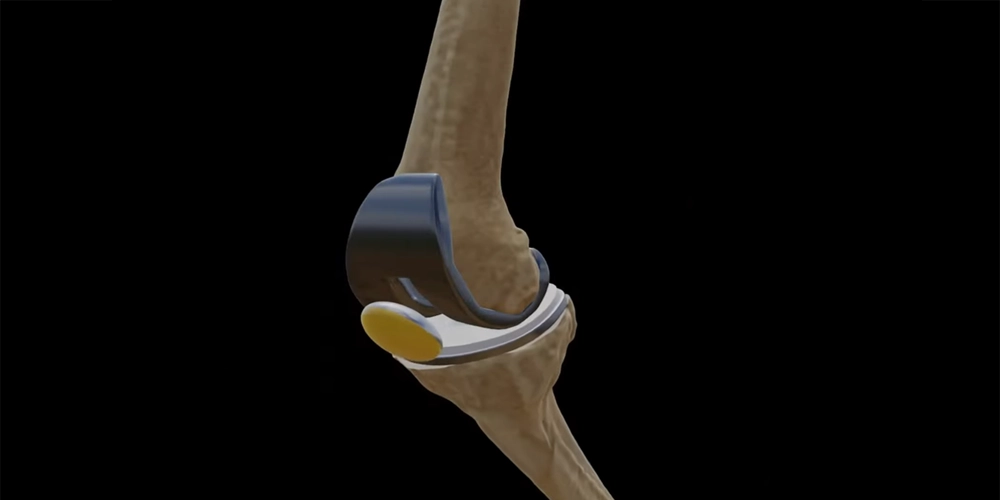
Patient-specific knee replacement surgery leverages advanced imaging, high-resolution CT or MRI, to generate a precise three-dimensional reconstruction of the patient’s knee joint. Specialised software processes this data to delineate bone morphology, ligament positioning, and mechanical axes. From this virtual model, custom surgical resection guides and patient-matched implants are fabricated via 3D printing technologies.
During the procedure, surgeons employ these guides to execute bone cuts with sub-millimetre accuracy, preserving healthy tissue and optimising implant seating. This method aligns the prosthesis with the patient’s native anatomy, promoting natural joint mechanics and load distribution. At Soundarapandian Bone and Joint Hospital, our orthopaedic specialists combine this technology with intraoperative verification to ensure optimal placement.
The 3D knee replacement benefits are well-documented in clinical literature. Primarily, the bespoke design minimises gaps between implant and bone, reducing micromotion and enhancing long-term stability. Implant survivorship exceeds 97% at 10 years, surpassing conventional rates of 90-95%. Patients achieve improved proprioception and gait symmetry, reporting higher satisfaction scores.
Additionally, reduced surgical trauma, through smaller incisions and precise tissue handling, lowers intraoperative blood loss (often below 200 mL) and transfusion requirements. Postoperative pain is markedly diminished, enabling earlier mobilisation and decreasing opioid utilisation. Long-term advantages include decreased stress on adjacent joints, mitigating secondary osteoarthritis.
A hallmark of this innovation is the shortened 3D knee replacement recovery time. Patients frequently commence assisted ambulation within 12-24 hours postoperatively, with hospital discharge achievable by postoperative day 2-3. By one week, most resume light activities; full weight-bearing occurs within 2-4 weeks, compared to 6-8 weeks traditionally.
Comprehensive recovery milestones include 90° knee flexion by 10-14 days (versus 4 weeks), driving resumption by 4 weeks, and return to low-impact pursuits such as cycling by 6-8 weeks. Full athletic activities resume in 3 months for many, facilitated by immediate implant stability and our hospital’s structured rehabilitation protocols. Complication rates decline significantly, infection to under 1%, deep vein thrombosis by 50%, further streamlining convalescence.
3D modelling extends beyond immediate recovery to support sustained joint health and functionality. The precise alignment reduces uneven wear on the implant and surrounding structures, preserving adjacent joints like the hip and ankle. Patients experience enhanced stability during dynamic activities, walking on uneven terrain, climbing stairs, or light sports, without the “high-tech” stiffness sometimes associated with standard replacements.
This technology proves particularly valuable for India’s diverse population, accommodating varied body types, occupational demands, and lifestyle factors. Farmers bending for fieldwork, professionals navigating urban environments, and seniors maintaining independence all benefit from restored natural kinematics that endure daily rigours.
The process unfolds systematically:
This workflow reduces operative time to 60-90 minutes while upholding sterility and efficacy. Cost-effectiveness emerges through diminished revision rates and healthcare resource utilisation.
Scepticism regarding novelty persists, yet 3D-printed components have received regulatory approval for over a decade, with tens of thousands implanted globally. Affordability is managed through tiered packages and insurance compatibility at our facility. Patient selection criteria: moderate-to-severe arthritis, BMI <40, absence of infection, and ensure suitability.
3D modelling represents the vanguard of knee arthroplasty, delivering 3D knee replacement benefits, expedited 3D knee replacement recovery time, and transformative patient-specific knee replacement surgery. Patients at Soundarapandian Bone and Joint Hospital experience not merely joint restoration, but comprehensive life enhancement.
How much faster is recovery with 3D vs. traditional methods?
3D knee replacement recovery time is dramatically shorter, walking within 1-2 days, discharge in 2-3 days, and full activity in 3 months, versus 6-12 months traditionally. Patients climb stairs in 2 weeks and resume desk work sooner due to less pain and tissue damage.
Does 3D knee replacement hurt more or less than regular surgery?
Less. Smaller incisions, precise bone cuts, and minimal tissue disruption mean lower pain scores, reduced swelling, and fewer painkillers needed. Many patients walk comfortably the same day without narcotics after 24 hours.
Will my new knee feel natural, or robotic?
Natural. Patient-specific knee replacement surgery replicates your anatomy, preserving ligaments and motion patterns. Patients report better balance, stair-climbing ease, and squatting ability compared to standard replacements.
Are there risks or complications with 3D technology?
Risks mirror traditional surgery but are lower: infection <1%, clots reduced 50%, and revisions are half. FDA-approved materials and our NABH-accredited protocols minimise issues. Pre-op screening ensures safety.

 Virtual Tour
 Book an Appointment
 What's App