 ChatGPT
 Claude
 Perplexity
 Google AI
 Grok
Slip Disc Treatment: Can a Disc Bulge Heal Without Surgery?
If an MRI report has just told you that you have a slip disc, or a “disc bulge at L4-L5”, you may assume surgery comes next. For most people, it doesn’t. Slip disc treatment usually begins with non-surgical care, and for most patients the pain, tingling and weakness settle over a few weeks to a few months. The American Academy of Orthopaedic Surgeons notes that only a small share of people with a lower back disc herniation need an operation.
This guide is for anyone in Chennai or elsewhere in Tamil Nadu who has back and leg pain, or neck and arm pain, caused by a disc. It explains disc bulge treatment step by step, including what helps, what to avoid, and when surgery makes sense.
Slip Disc, Disc Bulge, Herniated Disc: Are They the Same?
Your spine is a stack of bones (vertebrae) with a disc between each pair. Each disc works like a thick rubber washer with a soft, gel-like centre. It absorbs shocks and lets the spine bend.
Despite the name, a “slip disc” doesn’t actually slip out of place. Doctors use more precise terms:
- Disc bulge: the disc spreads slightly beyond the edges of the bones. This is very common with age and often painless.
- Herniated, prolapsed or slipped disc: part of the soft centre pushes through a weak spot in the outer ring, usually in one place.
Symptoms appear when disc material presses on or inflames a nearby nerve. That causes pain that travels down the leg (sciatica) or into the arm. Herniated disc treatment, disc prolapse treatment and slip disc treatment all share one aim: calming that nerve and getting you moving again.
If you’re still unsure whether your pain comes from a disc, start with our guide to the symptoms of slip disc and when to see a specialist.
Can a Slip Disc Be Cured?
Yes, many people recover from symptoms without surgery. For most people, the pain, numbness and weakness settle and they return to normal life, usually without surgery.
What “Cured” Means for a Slip Disc
- Pain and nerve symptoms ease, and you can work, sleep and move normally again.
- The disc may still show on a later MRI. This is common and usually not a problem.
- Symptoms can return, so ongoing back care still matters.
How the Body Heals a Herniated Disc
- Immune cells gradually break down disc material that has pushed out.
- The herniation often shrinks over weeks to months.
- A systematic review (Chiu et al., 2015) found that disc shrinkage was reported in:
- 96% of sequestered discs
- 70% of extrusions
- 41% of protrusions
- 13% of simple bulges
- Surprisingly, the larger herniations tended to shrink the most.
Can a Disc Bulge Return to Normal?
- A simple bulge often stays visible on scans.
- But a bulge is often not what is causing the pain.
- A review of scans in people with no back pain (Brinjikji et al., 2015) found disc bulges in 30% of 20-year-olds and 84% of 80-year-olds.
- So the goal is to feel and function well again, not to have a perfect scan.
How Doctors Confirm a Slip Disc
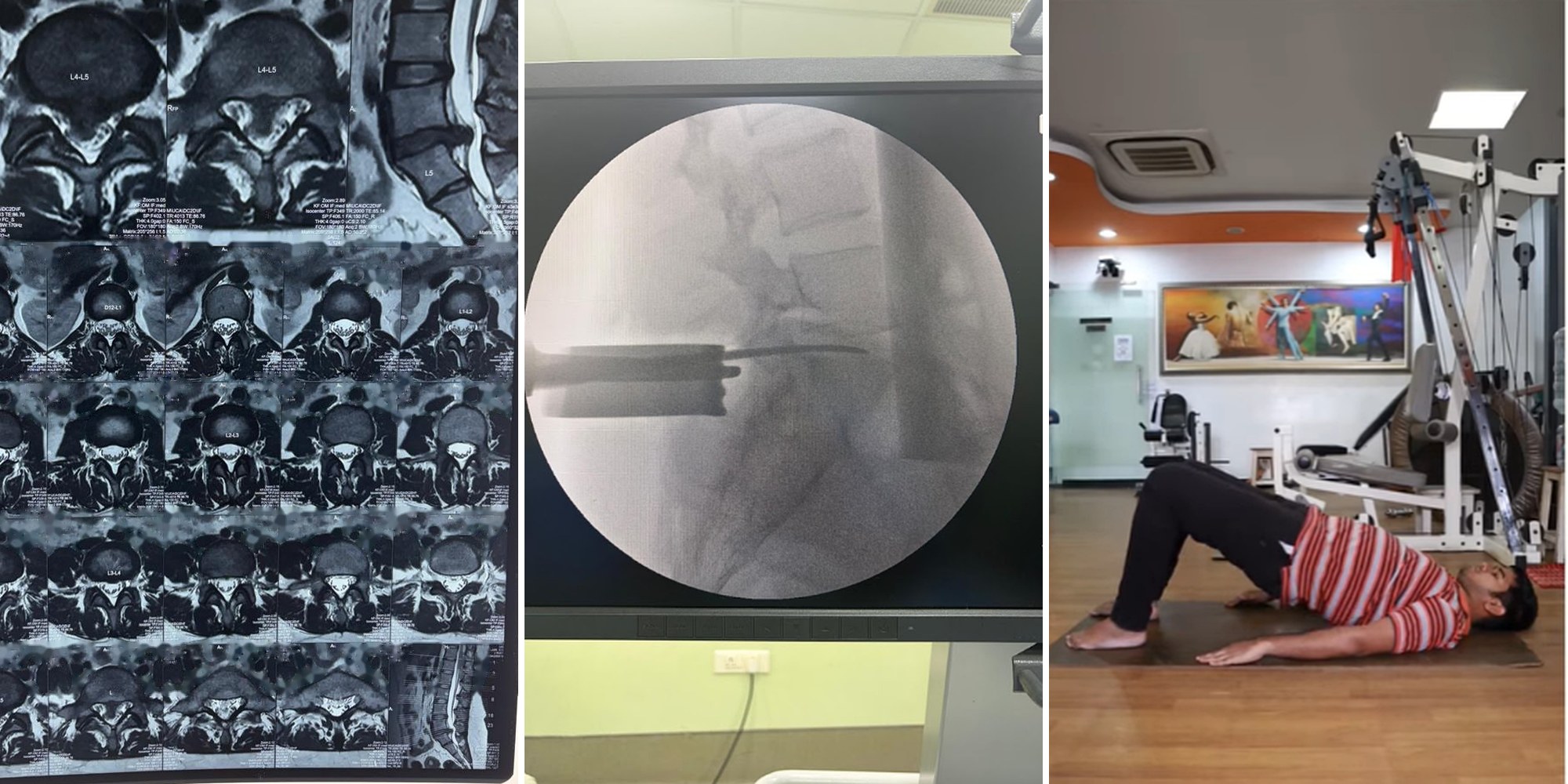
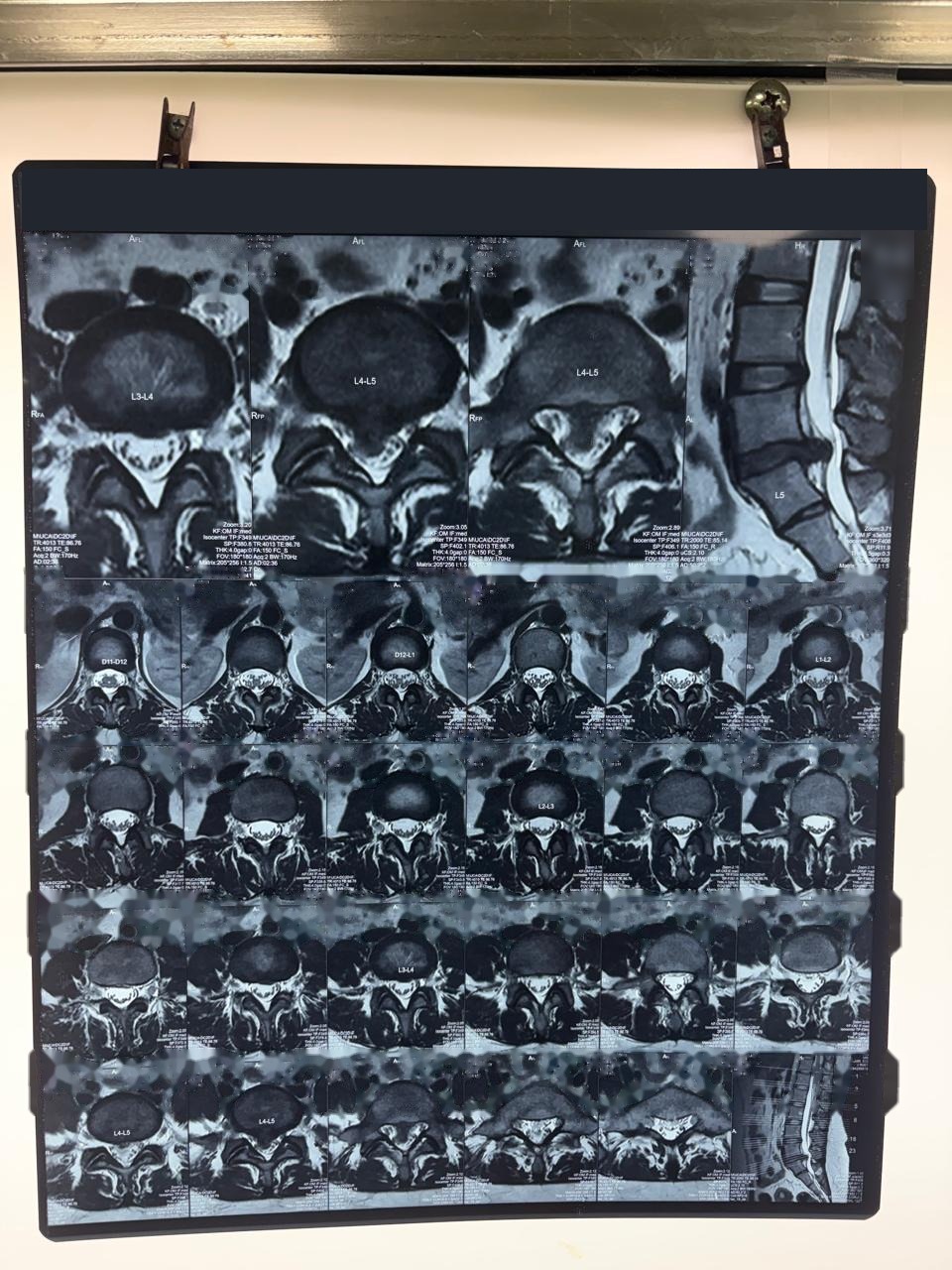
Diagnosis starts with a conversation and an examination. Your doctor will ask where the pain travels and what makes it worse. They will then check your reflexes, muscle strength and skin sensation. According to the NHS, a slipped disc can usually be diagnosed from symptoms. An MRI is arranged if symptoms don’t improve, if warning signs appear, or before an injection or surgery.
MRI reports often use words that sound alarming:
- L4-L5, L5-S1, C5-C6: the disc’s position. L4-L5 is between the 4th and 5th lower back bones; C5-C6 is in the neck.
- Diffuse disc bulge: the disc extends evenly around its edge. This is common and often painless.
- Posterior or posterolateral: the bulge points towards the back or back and to one side, where the nerves exit.
- Protrusion, extrusion, sequestration: increasing degrees of herniation.
A scan finding only matters if it matches your symptoms and examination.
Slip Disc Treatment Without Surgery
For most people, slip disc treatment without surgery is the first plan, usually for six to twelve weeks, unless warning signs appear.
Stay Active, Keep Rest Short
If the pain is severe, a day or two of rest may help. After that, the NHS advises returning gradually to gentle activity such as walking, swimming or yoga, because people recover faster when they keep moving. Long bed rest is no longer advised.
Medicines
Your doctor may suggest anti-inflammatory painkillers if they suit you and sometimes short-term stronger pain relief or a muscle relaxant. The aim is to make movement possible. Some medicines widely used for nerve pain have shown little benefit for sciatica in research (NICE guideline NG59), so your doctor will weigh the benefits and side effects with you. Please don’t start or combine pain medicines without medical advice.
Physiotherapy for Slip Disc
Physiotherapy and guided exercise can play an important role. A physiotherapist assesses how you move, then builds a graded programme to strengthen the back and abdominal muscles and restore normal movement. Our rehabilitation team provides this structured spine rehabilitation.
Slip Disc Exercise: What’s Safe and What to Avoid
The right exercises depend on your examination, but as a general guide:
- Usually helpful: short, frequent walks, gentle movement within comfort, and changing position often.
- Best avoided during a flare-up: heavy lifting with a twist, repeated deep bending, long unbroken sitting, and high-impact sports.
If pain spreads further down your leg or arm, or new numbness appears, stop that movement and tell your physiotherapist.
Epidural Steroid Injection
For acute, severe leg pain, doctors may offer an injection of local anaesthetic and steroid near the irritated nerve. It doesn’t remove the disc, but it can calm inflammation enough for you to move and continue physiotherapy.
Everyday Habits
- Two-wheeler riding: potholes and speed breakers jolt the spine. During a flare-up, take an auto or cab if you can. Once you’re riding again, slow right down over bumps.
- Desk work and long commutes: stand and move every 30 to 45 minutes, keep the screen at eye level, and support your lower back. See our guide to ergonomics for back and neck pain.
- Lifting at home: water cans, gas cylinders and full buckets are activities that may aggravate existing symptoms. Bend your knees, keep the load close, and turn with your feet instead of twisting.
Treatment by Disc Level
L4-L5 Disc Bulge Treatment
An L4-L5 problem usually causes pain down the outer leg to the top of the foot. L4-L5 disc bulge treatment without surgery follows the plan above. Weakness lifting the foot or big toe needs prompt review.
L5-S1 Disc Bulge Treatment
At L5-S1, pain tends to travel down the back of the calf into the sole of the foot. Doctors check for weakness rising on the toes. Treatment again starts with non-surgical care.
Cervical Disc Bulge, Including C5-C6
A C5-C6 disc can send pain from the neck into the shoulder, arm and thumb side of the hand. The AAOS notes that most people improve over time with non-surgical care. Clumsy hands, difficulty with buttons, or unsteady walking can mean the spinal cord is under pressure, and these signs and symptoms require urgent medical assessment.
When Is Slip Disc Surgery Needed?
Go to the nearest emergency department immediately if back pain comes with:
- numbness around the bottom, genitals or inner thighs
- difficulty passing urine, or loss of bladder or bowel control
- leg weakness that is getting worse
These can signal cauda equina syndrome, a rare emergency that needs urgent surgery.
Outside emergencies, surgery is considered when proper non-surgical treatment hasn’t improved pain or function, often after six to twelve weeks, and the MRI matches the symptoms. In a landmark trial (Peul et al., 2007), early surgery relieved severe sciatica faster. At one year, however, results were similar to starting with non-surgical care.
Common types of disc bulge surgery:
- Microdiscectomy: through a small cut, the surgeon removes only the piece of disc pressing on the nerve.
- Endoscopic discectomy: a similar operation done with a thin camera through an even smaller opening.
- Neck surgery: removing the disc from the front, then fusing the bones or fitting an artificial disc.
All surgery carries risks, including infection, nerve injury and the disc herniating again. Learn more on our Spine Surgery page.
Slip Disc Recovery Time
| Activity | General recovery guidance |
|---|---|
| Walking | Usually encouraged early, as tolerated |
| Desk work | Depends on symptoms, comfort and job demands |
| Driving | Only when medically cleared and able to control the vehicle safely |
| Two-wheeler riding | Resume only after adequate recovery and medical clearance |
| Heavy work | Requires gradual return based on strength, function and surgeon’s advice |
Recovery timelines vary according to the patient’s condition, type of treatment, surgical procedure and occupational demands. Your treating surgeon will provide individual guidance.
Soundarapandian Key Takeaways
- Most slip discs improve without surgery.
- A disc bulge on MRI is common even without pain. Your symptoms matter more than the scan.
- Stay gently active, because long bed rest slows recovery.
- Physiotherapy-led exercise is central to recovery and prevention.
- Groin numbness, bladder or bowel changes, or worsening leg weakness need emergency care.
- If there’s no improvement after six to twelve weeks, see a spine specialist.
Getting the Right Care for Your Disc
A slip disc can make ordinary things, like a ride to work or lifting a water can, feel impossible. Many patients return to daily activities with appropriate treatment. For those who do need surgery, well-established options exist.
If back or neck pain is spreading into your leg or arm or affecting your work and sleep, consult a spine specialist for a proper evaluation. For sciatica treatment in Chennai, or any disc problem, contact Soundarapandian Bone and Joint Hospital, Anna Nagar, on 044 3506 6666, or book a spine consultation online.
Frequently Asked Questions
How long does a slipped disc take to heal?
Most people improve over a few weeks to a few months. If you haven’t improved after six to twelve weeks of proper treatment, see a specialist.
Is walking good for a slipped disc?
Yes, for most people. Take short, regular walks, and stop if pain spreads further down your leg.
What is the best sleeping position with a slip disc?
There’s no single correct position. Many people find it easier lying on their side with a pillow between the knees or on their back with a pillow under the knees.
Can a disc bulge come back after treatment?
Yes, disc problems or related symptoms can recur, even after treatment or surgery. The risk varies between individuals. Maintaining appropriate physical activity, following your rehabilitation programme and avoiding smoking can support overall spine health.
Which doctor should I see for a slip disc in Chennai?
See an orthopaedic spine specialist. They manage both non-surgical care and surgery.
Is surgery safe for an L4-L5 disc bulge?
Microdiscectomy is a common, well-established operation, but no surgery is risk-free. It’s recommended only when symptoms match the MRI and haven’t improved with good non-surgical care.
Author